2026-11-20 · 3 min read · Coeur d'Alene
Buying a Home in North Idaho in Winter: What to Check When There's Snow on the Ground
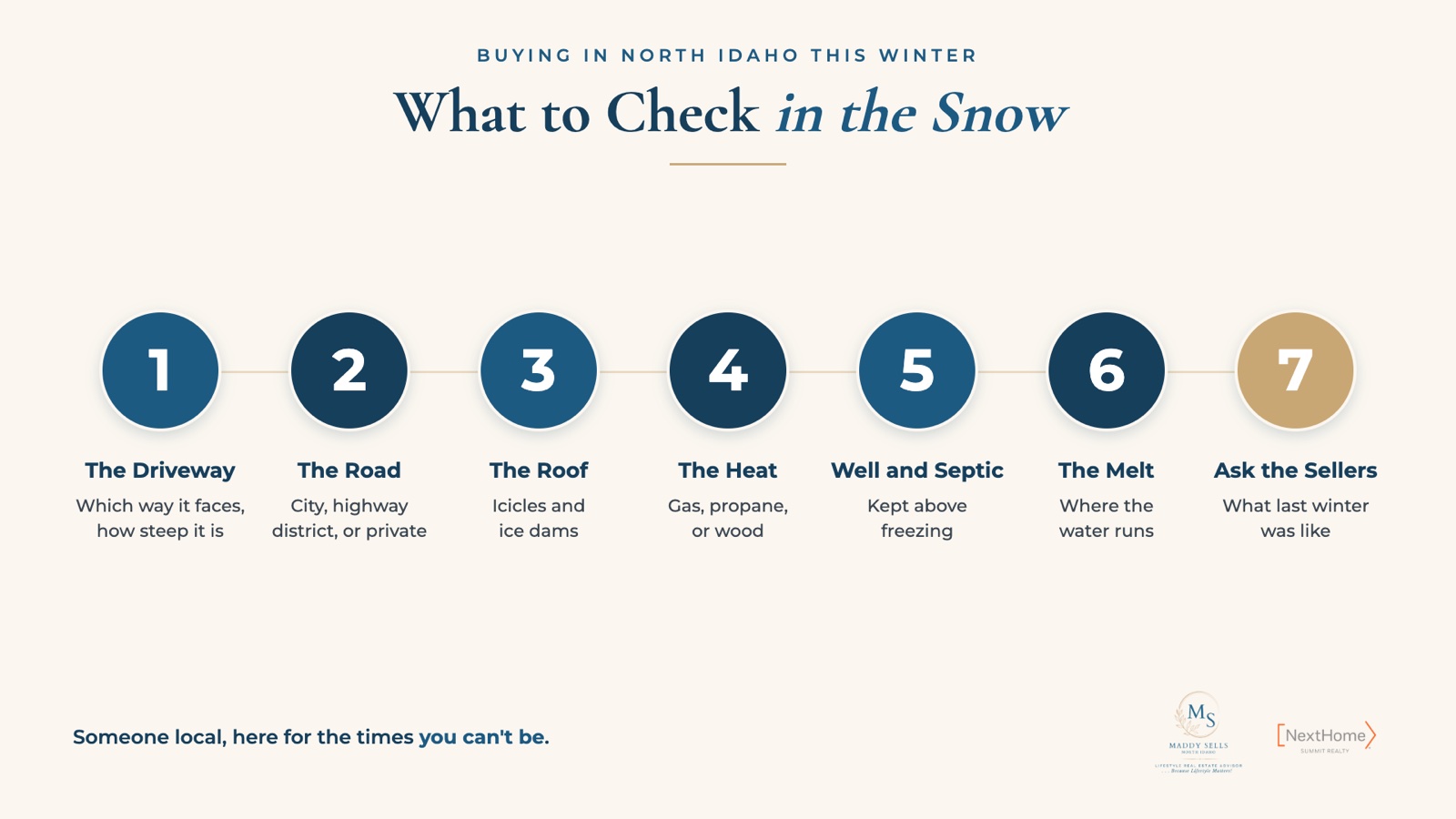
Snow doesn't hide a home's problems in North Idaho. It shows them to you. If you're looking at homes this winter, you'll learn things about a property that a summer listing photo never could.
I'm Maddy Loren, a Realtor® with NextHome Summit Realty. I've lived in North Idaho since 2012, and I help people moving here from other states find a home in Coeur d'Alene, Hayden, Post Falls, and Rathdrum that fits how they want to live.
I walk through homes and the surrounding property for my buyers all year. When I do it in winter, these are the things I check.
Which way the driveway faces
A driveway that faces south gets sun and melts off. One that faces north can hold ice for weeks. A steep driveway that looks charming in summer can be a daily problem in January. Stand at the top and picture backing down it on ice at 7 in the morning.
Who plows the road
Ask who clears the road to the house. Cities plow their own streets. Roads outside city limits are usually cleared by a local highway district. A private road is up to the neighbors who share it, often through a road maintenance agreement.
Read that agreement before you buy. It should say who plows and how the cost is split. Then ask a neighbor how soon the road gets cleared after a big storm.
What the roof is telling you
Look at the roof from the street. Long icicles and thick ridges of ice along the edge can mean heat is escaping through the attic, which is how ice dams form. Bare patches on an otherwise snowy roof can point to the same thing.
Neither is a reason to walk away. Both are worth a closer look from your inspector.
How the house stays warm
Find out what heats the home. Many homes here run on natural gas from Avista. Where gas lines don't reach, homes often use propane, electric heat, a heat pump, or a wood or pellet stove.
Ask for the last year of heating bills. If there's a propane tank, ask whether it's owned or leased and who fills it. If there's a wood stove, ask when the chimney was last cleaned, and talk to your insurance agent before you count on it.
Wells and septic in the cold
Many homes here, especially on acreage and land, have a well and a septic system. Any part of the water system that sits above ground, like a pump house or a pressure tank in a crawl space, needs to stay above freezing. Look for heat tape or a heater, and for signs that pipes froze before. A septic system can freeze too, especially when a home sits empty.
Test the well water before you buy. On one property with a shared well, I collected the water samples myself and was at the inspection, because the buyers didn't have the time to be there.
Where the melt goes
Watch where melting snow runs. Water pooling against the foundation, a damp crawl space, or a wet garage floor tells you about drainage. Notice where you'd pile the snow you shovel, and whether the plow will leave a wall of it across the end of your driveway.
Ask the sellers about last winter
Sellers know things no listing says. Ask them:
- Did any pipes freeze?
- Did ice dams or roof leaks show up?
- How long after a storm was the road cleared?
- What did it cost to heat the home in the coldest month?
- Did the power go out, and for how long?
See it in the snow, even from far away
If you can't be here this winter, you don't have to guess. I'll walk through the home and the land for you, record video, check everything on this list, and be there for the inspection and the well test. You'll know what January looks like before you decide.
I put more of this into a free Moving to North Idaho guide.
If you're planning a move, call or text me at (208) 819-1355. Tell me where you're coming from and when you hope to land.
Because lifestyle matters.